
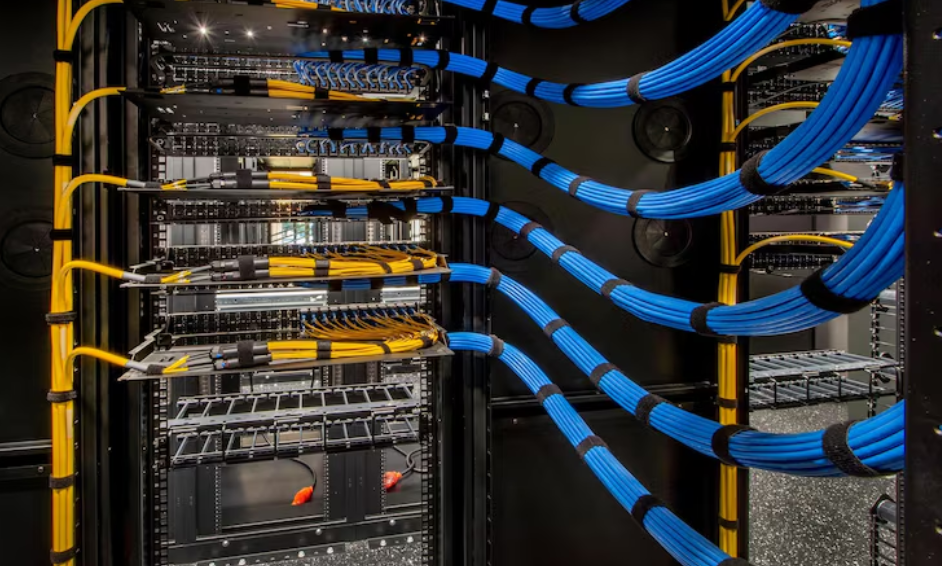
Modern facilities depend on reliable network connections to support daily operations. Offices, warehouses, hospitals, schools, and industrial buildings use connected devices to share information, communicate, and manage important tasks. A strong network infrastructure helps these activities run smoothly. Fiber structured cabling is an effective solution for improving connectivity because it supports fast data transfer, reliable communication, and future network growth.
Understanding Fiber Structured Cabling
Fiber structured cabling is a network system that uses fiber optic cables to transmit data through light signals. Unlike traditional copper cables, fiber optic cables can carry large amounts of information over long distances with minimal signal loss. This makes them useful for facilities that need fast and stable connections across multiple rooms, floors, or buildings.
A well-planned fiber structured cabling system connects network equipment, servers, communication devices, and other technologies through an organized infrastructure. This arrangement makes it easier to manage connections and maintain consistent network performance throughout the facility.
Improving Network Speed and Performance
Fast data transfer is important for businesses that rely on cloud applications, video meetings, online systems, and large digital files. Slow connections can interrupt work and reduce productivity. Fiber structured cabling helps address these challenges by providing high bandwidth and supporting demanding network activities.
With a suitable fiber network, employees can access shared resources, transfer files, and communicate with colleagues more efficiently. This improved performance is especially valuable in facilities where many users and devices need reliable access to the network at the same time.
Supporting Reliable Connectivity Across Large Facilities
Large facilities often have network equipment spread across different floors, departments, and buildings. Connecting these areas can be challenging when traditional cabling has distance limitations. Fiber structured cabling supports long-distance connections while maintaining strong signal quality.
Fiber optic cables are also less affected by electromagnetic interference from electrical equipment. This can be helpful in industrial environments where machinery and other electronic systems operate nearby. By reducing signal interference, fiber structured cabling helps provide more dependable communication between connected systems.
Making Network Management Easier
An organized cabling system makes it easier for technical teams to identify connections, troubleshoot problems, and complete maintenance tasks. Fiber structured cabling follows a planned layout that helps keep network infrastructure neat and manageable.
When cables and connection points are properly labeled and documented, technicians can locate faults more quickly. This can reduce downtime and make network upgrades easier to complete. A structured design also helps facilities avoid unnecessary cable clutter as new devices and departments are added.
Preparing Your Facility for Future Growth
Technology continues to develop, and facilities often need additional bandwidth to support new applications, security systems, smart devices, and cloud services. Fiber structured cabling provides a strong foundation for future expansion because fiber networks can support high data capacities.
With proper planning, businesses can install additional network equipment and extend connections without replacing the entire cabling infrastructure. Although upgrades may still require compatible hardware, fiber cabling offers flexibility for facilities with changing technology needs.
Conclusion
Fiber structured cabling improves connectivity by supporting fast data transfer, reliable communication, organized network management, and future expansion. It helps facilities connect different departments and devices through a dependable infrastructure. By investing in a well-designed fiber structured cabling system, businesses can improve daily operations and build a network that supports their long-term technology goals.